What is a healthy weight? How to know what weight you should be? How to loose extra body fat? What is a realistic amount of weight to lose?
BMI:
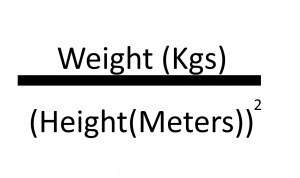
BMI stands for Body Max Index. It provides a scale of healthy weight range. It is calculated both off your weight and your height.
BMI = Weight (In kgs) / Height in meters squared
The BMI number gives a number indicating a weight range
- 18.5 and lower: Underweight
- 18.5-24.9: Healthy Weight range
- 24.9-29.9: Overweight
- 30-35: Obese
- 35-40: Severely Obese
- 45 and above: Morbidly obese
Calculating your BMI can help indicate the weight range you are in and indicate whether you should aim to lose some weight.
BMI can be inaccurate for different body types. BMI can be overestimated in individuals with increase muscle- such as athletes or underestimated in older individuals who have lost muscle.
Waist circumference:
Another way to determine whether you are in a healthy weight range is via weight circumference. Measure your waist circumference by measuring just above your hip bones. Make sure you measure after breathing out for an accurate measurement.
- Women > 80 cm
- Men > 94 cm
Indicates an increased weight circumference and could indicate a need for weight loss.
Risk of being overweight:
Unused energy is converted and stored as fat in the body. If a higher energy intake is consumed than what the body requires the excess energy results in increased fat and weight on the body. Increased fat on the body is bad for multiple reasons.
Fats clogs the arteries; clogged arteries reduce blood flow around the body and to the heart. Increasing the risk of Cardiovascular disease. Obesity and excess weight gain increase an individual’s risk of Stroke, cardiovascular disease, Diabetes, Cancer, Mental Health Problems and more. For individuals who are overweight or obese- losing just 5-10% of body weight can decrease your risk of developing different severe disease.
Muscle Weighs More than Fat:
The old Garfield quote is true! Muscle does weigh more than fat. Therefore, for individuals putting on muscle, BMI can be inaccurate. Losing fat can result in weight loss but if muscle is put on at the same time weight loss can stagger or even increase depending on your body. Therefore, measuring weight circumference and body fat percentage can give a clearer picture of weight loss.
Try taking a picture of yourself now in either fitted clothing or in underwear. Re-take a similar photo in a couple months’ time after starting your fitness journey. Comparing the two photos can show a large improvement even if the scales do not.
Muscle also uses more energy that fat. Therefore, a larger muscle percentage can increase your metabolism.
Metabolism:
Metabolism is the amount of energy your body requires to function. For example- if you were in a coma- how much energy would your body require to continue functioning. To keep your organs functioning and basic bodily life functions continuing.
When we add in movement, thinking, exercising the bodies energy demands increase. By increasing our bodies energy requirements- the more energy we can consume before it is stored and converted to fat. In contrast- if our body requires more energy then our energy consumptions- fat and muscle is broken down resulting in weight loss.
Unfortunately, the body will break down muscle as well as fat. So, for weight loss that maintains muscle growth it must be a combination of healthy eating and physical activity.
Muscle Growth:

Building muscle can be a great way to increase energy demands and increase metabolism. Most men are keen to build muscle, but many women are hesitant. There is a misconception that if women do weight training they will build large muscles and look bulky and masculine. This is incorrect. Weight training to build muscle is great way to lose weight and increase metabolism for both men and women.
Males and Females bodies are shaped differently naturally. Plus, gender specific hormones lead men and women to look different. Weight training will not change the femininity of a women’s body. Weight training can be a great way for women to achieve the body shape they desire.
Weight training:
Can lead to fat loss and muscle growth. Fat loss can result in a slimmer physique and increasing muscle mass on the body can tone the body. Weight training is recommended 3 times a week for greatest results. Building muscle through weight training can be a quicker and easy way to lose fat without spending hours and hours performing cardio. Without building muscle- although fat may be lost, the body will not have that trim toned look.
Energy Consumption:
It is also important to watch what is consumed when considering weight loss. An excess of energy going into the body can increase fat and make losing weight harder.
See tips on Healthy Eating by clicking HERE for simple healthy eating guides that will aid your weight loss journey.